Role
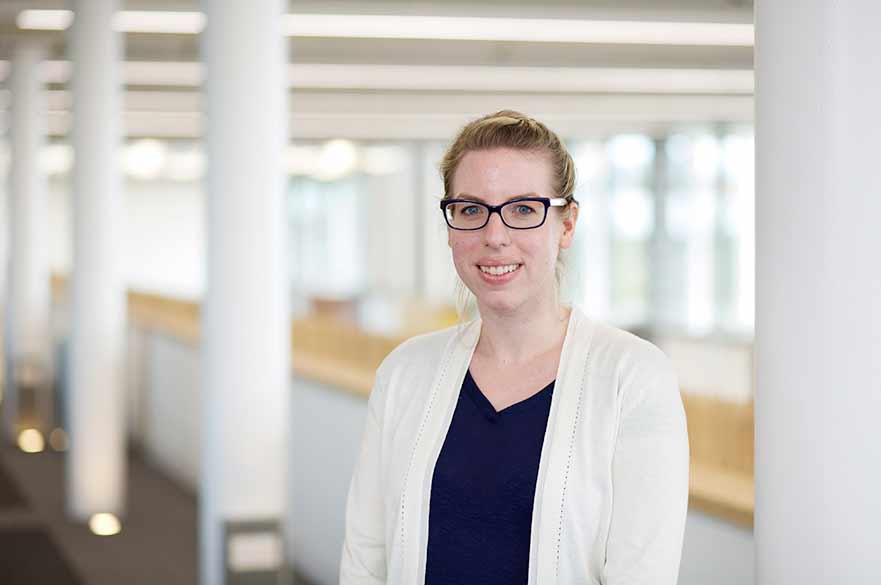
Dr Katharina Massing is a Senior Lecturer in Museum and Heritage Development in the School of Social Sciences. She contributes to scholarly activities, research, and professional practice, and leads and teaches several modules on the MA Museum and Heritage Development at NTU, as well as on two partnership programmes: the Sino-UK Joint Institute with the Communication University of China (CUC) and the MA Museum and Heritage Development dual degree, which is jointly delivered with Beijing Language and Culture University (BLCU). She is passionate about creating an inclusive teaching environment and supporting students in developing their creative practice.
Kat is also a PhD supervisor, supporting research students whose work focuses on community engagement with landscape and place, wellbeing, and the safeguarding of intangible heritage.
Kat is interested in holistic and community-led approaches to safeguarding landscapes and traditional knowledge, as well as sustainable heritage practices, particularly ecomuseums. She teaches and researches ways in which museums can engage with diverse communities and communicate anthropogenic change. She has been involved in several international projects, including projects in Vietnam, China, and Uzbekistan. She also works with local communities and organisations in the Midlands, including Southwell and Birmingham Botanical Gardens.
Together with her colleague Charlie Gregson, she is Co-Chair of the Heritage & Communities Partnership Knowledge Exchange Network, a collaborative forum between NTU and heritage professionals.
Career overview
Kat joined NTU in 2016 after completing her PhD in Museum, Gallery and Heritage Studies at Newcastle University. She also holds an MA in Chinese Studies (major), Chinese Language (minor), and East Asian Art History from Freie Universität Berlin.
Kat has held several leadership roles at NTU. She served as Course Leader for the MA Museum and Heritage Development for five years and also led the collaborative Museum and Heritage Development programmes with the Communication University of China and Beijing Language and Culture University for several years. In addition, she was the Collaborative Academic Lead for the Communication University of China.
Research areas
Kat's current research interests include:
- Ecomuseums and community museums
- Intangible cultural heritage
- Natural heritage, landscapes, and museological responses to anthropogenic change
- Decolonisation in museums and heritage
External activity
Kat is a Fellow of the Higher Education Academy. She is also a Stakeholder Committee Member of the University of Nottingham Museums.
Publications
Massing, K. (2017) ‘Safeguarding intangible cultural heritage in an ethnic theme park setting – the case of Binglanggu in Hainan Province, China’. International Journal of Heritage Studies. doi: 10.1080/13527258.2017.1362571.
Massing, K. (2015) ‘Establishing ecomuseums in Hainan Province: challenges and opportunities for community participation in intangible cultural heritage protection’. In Lira, S., Amoêda, R. and Pinheiro, C. (eds) Sharing Cultures 2015: Proceedings of the 4th International Conference on Intangible Heritage. Barcelos: Green Lines Institute, pp. 477-488.
Corsane, G. and Massing, K. (2015) ‘Establishing Ecomuseums in Hainan Province’. In Corsane, G. and Li, J. (eds) Research of China and UK Cooperative Cases in Cultural Creative Industry. Beijing: China Commerce and Trade Press, pp. 249-272.
Corsane, G. and Massing, K. (2015) ‘From the ‘fragmented’ to the ‘mosaic’ ecomuseum – various forms of shaping ‘territory’ in the different generations of ecomuseums in China’. In Lira, S., Amoêda, R. and Pinheiro, C (eds) Sharing Cultures 2015: Proceedings of the 4th International Conference on Intangible Heritage. Barcelos: Green Lines Institute, pp. 453-466.
Massing, K. (2013) Review of History of China, by Kai Vogelsang (in German). Politische Bildung, 2, pp. 162-163.
Massing, K. (2012) ‘Protecting the intangible heritage of Hainan Province: could the use of ecomuseum principles help safeguard the intangible heritage of the Li and the Miao minorities?’. In Lira, S., Amoêda, R., Pinheiro, C., Davis, P., Stefano, M., Corsane, G. (eds) Ecomuseums 2012: Proceedings of the 1st International Conference on Ecomuseums, Community Museums and Living Communities. Barcelos: Green Lines Institute, pp. 225-232.